With the announcement of the new functionalities of Microsoft Dataverse, Copilot Studio transforms into a true operating system for hybrid human-agent teams—a quantum leap towards orchestrated AI.
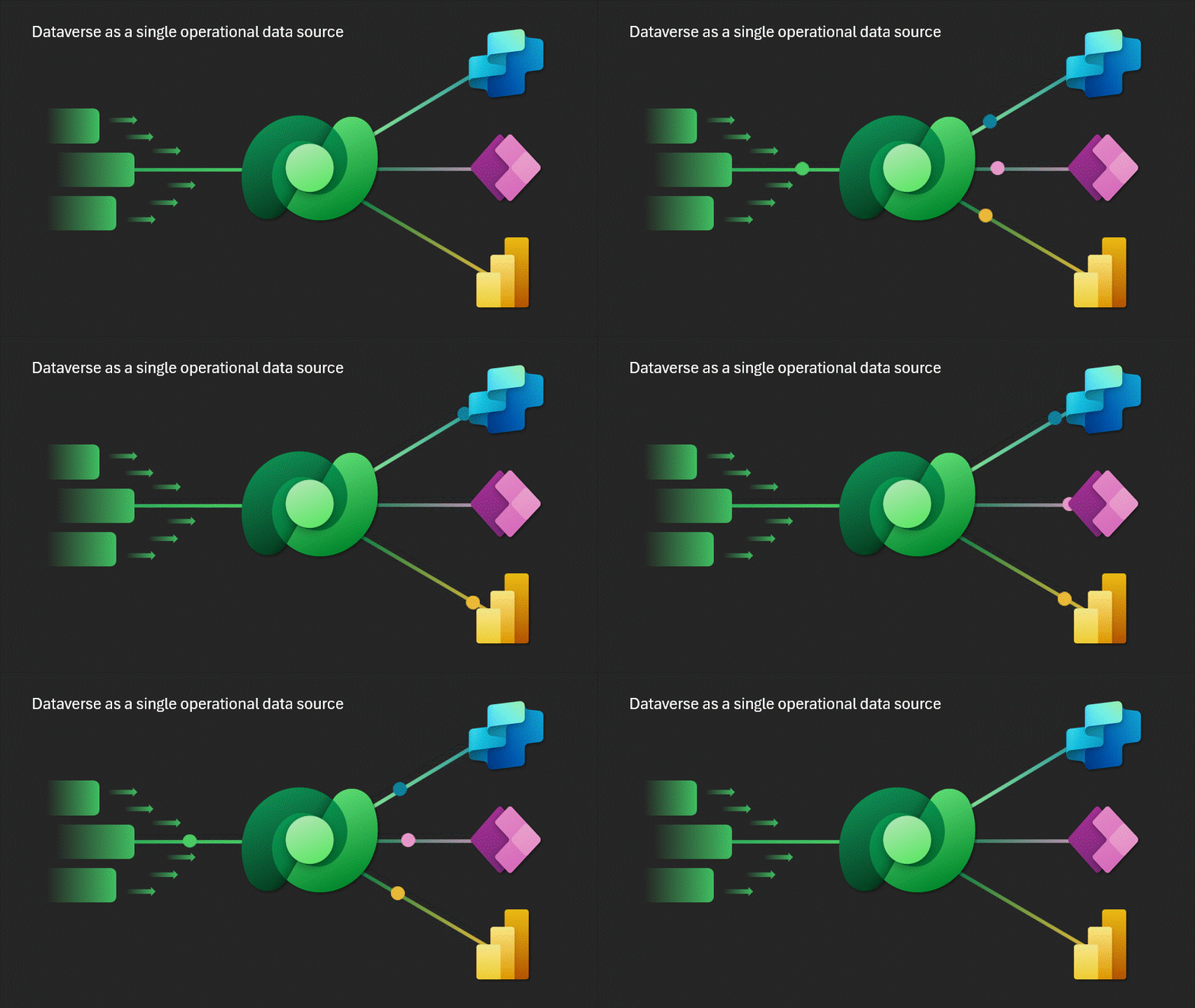
During Microsoft Build 2025, amidst keynote addresses and futuristic demos, one announcement captured the attention of those looking beyond the surface of platforms: Dataverse evolves to become the operational engine of multi-agent operations.
In a world where AI is no longer just an assistant but a co-protagonist in business processes, Microsoft reintroduces Dataverse as the essential infrastructure for orchestrating hybrid teams composed of humans and intelligent agents. This is not merely a technical update but a vision: to build systems where artificial intelligence does not work in silos but collaborates, learns, and acts in synergy with people.
Dataverse: From Database to Cognitive Platform
Until recently, Dataverse was the silent “backend” of low-code apps. Today, it becomes the operational brain of Copilot agents. The newly announced functionalities include:
- Prompt Columns: Database columns that generate dynamic values through AI prompts. Imagine a “Sentiment” column that automatically analyzes the text of a review and returns “Positive” or “Negative.”
- Model Context Protocol: A new standard to provide agents with the right context at the right moment, making their actions more intelligent and relevant.
- AI-powered Dataverse Search: A semantic search that connects data and meaning, not just keywords.
These tools transform Dataverse into an environment where AI not only reads data but interprets, connects it, and uses it to make decisions.

Multi-Agent Operations: The New Grammar of Work
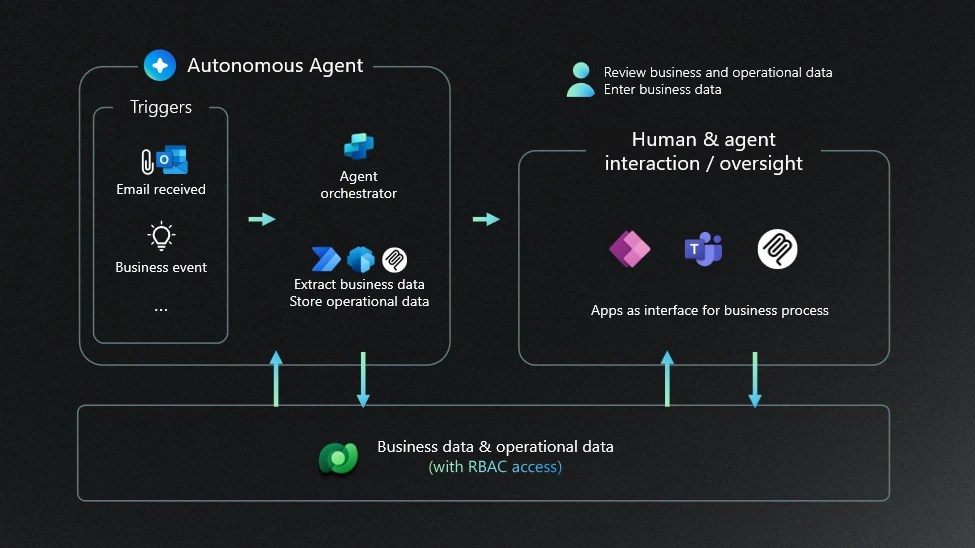
The true paradigm shift is the introduction of multi-agent operations. Instead of a single agent attempting to do everything, Microsoft proposes an ecosystem where specialized agents collaborate with one another and with humans. Some examples include:
- An Invoice Processing Agent extracts data from invoices.
- A Claims Assistant manages user interactions.
- A human supervisor approves the processed requests.
All these actors share the same operational language: Dataverse. This is where data turns into action, and AI becomes a partner.
Beyond Automation: Towards Distributed Intelligence
This evolution isn’t just about efficiency. It’s a new architecture of work. Where there were once rigid workflows and isolated automations, there are now adaptive systems, capable of learning, reacting, and collaborating. This is the beginning of a new era: the era of distributed intelligence.
What’s Next…
Microsoft is not merely updating a platform; it is proposing a new operational model for the organizations of the future. A model where AI is not just a tool but a colleague. Where data is not just stored but activated. And where Dataverse is no longer merely a database but the beating heart of a multi-agent ecosystem.
It’s fascinating how these tools have evolved over the years, and I look forward to further advancements in terms of new technologies and functionalities.
Boom, done 💣!
Follow me:
 BEYOND THE PLATFORMS
Leave a comment