“There is no such thing as the perfect prompt, but there is an effective prompt.”
I have written several articles on this topic, but given the relentless innovation of tools, it makes sense to refresh and update the discussion.
🧠 From Weak Prompt to Engineered Prompt
How to transform a generic request into a powerful prompt thanks to the 4 Pillars (Task, Context, Expectations, Output)
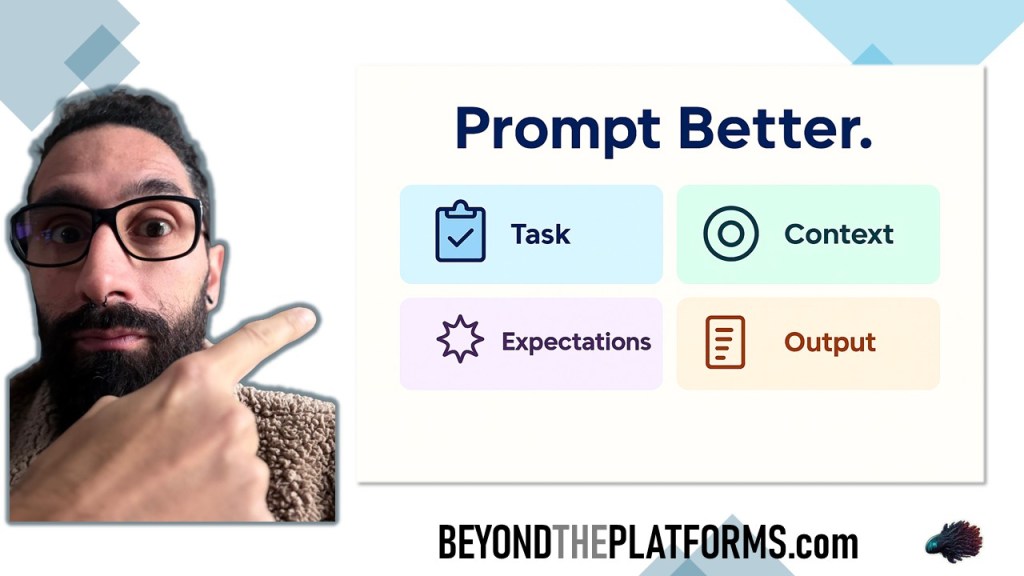
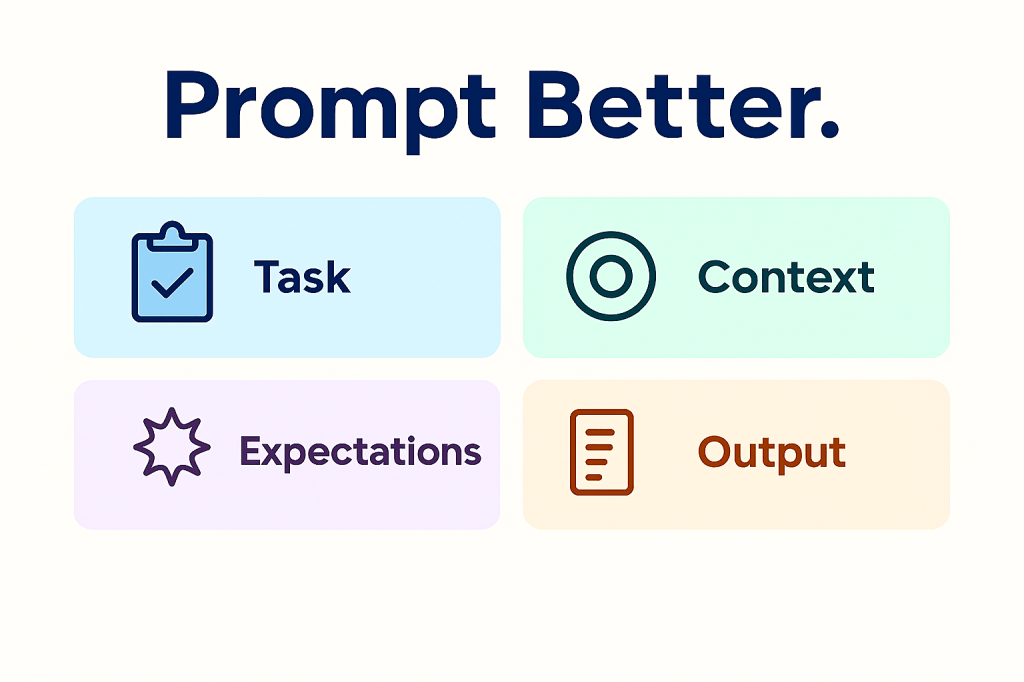
The effectiveness of a prompt determines the quality of the result produced by a generative AI model. In this article, we will explore the evolution of a prompt: from generic and weak to engineered and precise. To do so, we will rely on the four fundamental pillars:
- Task
- Context
- Expectations
- Output
And we will also include sample reviews, so as to show a realistic end-to-end case.
Now it’s time to try and understand in depth what happens. Copy and use my prompts!
The Weak Prompt
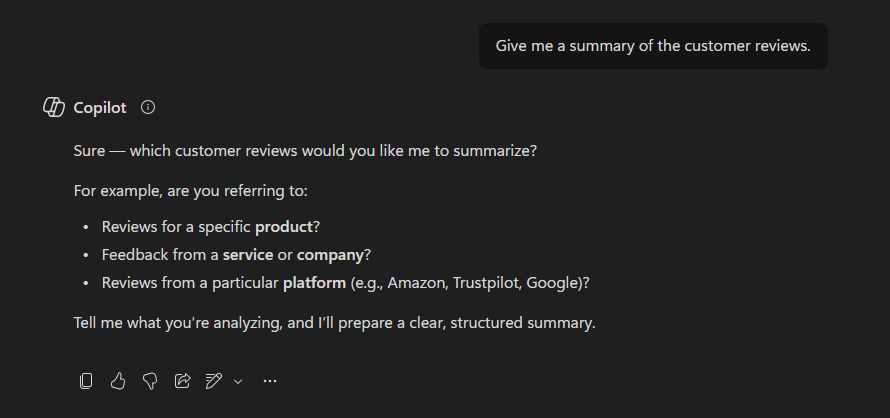
☠ ️ Prompt 1 – Poor and generic
“Give me a summary of the customer reviews.”
Problems:
- The task is vague.
- No context.
- No expectations.
- No output format.
The model will therefore produce a generic and often inaccurate summary.
Let’s Improve the Prompt with the Task Pillar
🧑 Prompt 2 – With Explicit Task
“Analyze the customer reviews and produce a summary.”
Now the model knows what to do, but not which data to work on.
Let’s Add the Context Pillar
Context provides the model with essential data and information.
In this case we include a set of sample reviews.
Sample Review Set (made up but realistic)
⭐ Review 1 “The software works well and the interface is very intuitive. However, after the latest update it takes longer to start up.”
⭐ Review 2 “Great customer service. They replied within minutes and solved the issue. However, I would like to have more customizable templates.”
⭐ Review 3 “The product is good, but I encountered several bugs when exporting reports. I couldn’t find a clear guide to fix them.”
⭐ Review 4 “I use the software for work every day and it has saved me hours. I really appreciate the automatic data analysis feature.”
⭐ Review 5 “Good product, but not compatible with some components of my system. The installation was more complicated than expected.”
Prompt enriched with Context
🧑🏾💻 Prompt 3 – Task + Context
“Analyze the following customer reviews related to the product Software X and produce a summary:
[paste the 5 reviews here]”
Now the model can work on real data.
Let’s Define the Expectations Pillar
Now let’s add what we want the AI to extract:
🧑🏾 Prompt 4 – Task + Context + Expectations
“Analyze the reviews above and identify:
- main themes
- overall sentiment
- recurring issues
- most frequently mentioned positive aspects”
Much better: the model now has clear and targeted criteria.
Output Pillar: how do you want the answer?
Without guidance on the format, the result may be messy.
The Final Engineered Prompt (complete)
🧩 Engineered Prompt – with all 4 pillars
Task
Analyze a set of customer reviews.
Context
The following reviews were collected over the past month for the product Software X :
- Review 1 “The software works well and the interface is very intuitive. However, after the latest update it takes longer to start up.”
- Review 2 “Great customer service. They replied within minutes and solved the issue. However, I would like to have more customizable templates.”
- Review 3 “The product is good, but I encountered several bugs when exporting reports. I couldn’t find a clear guide to fix them.”
- Review 4 “I use the software for work every day and it has saved me hours. I really appreciate the automatic data analysis feature.”
- Review 5 “Good product, but not compatible with some components of my system. The installation was more complicated than expected.”
Expectations
- Identify the main themes (e.g., usability, performance, bugs, customer service, requested features).
- Determine the overall sentiment.
- Highlight recurring issues and appreciated features.
- Point out potential improvement opportunities based on the feedback.
Output
Generate a concise report suitable for a marketing team meeting, organised into the following sections:
- General Overview
- Overall Sentiment
- Main Themes
- Recurring Issues
- Appreciated Aspects
- Operational Recommendations
Watch the video below for the final output!
Conclusions
By integrating the four pillars — Task, Context, Expectations, and Output, we turn a generic request into a professional, repeatable and engineered prompt.
The example with the reviews shows exactly how the quality of the prompt influences the quality of the result.
If you want to delve deeper into these topics, follow me and write to me.
Boom, done 💣!
Follow me:
 BEYOND THE PLATFORMS
Leave a comment